Blow-In-Blanket® insulation
Works with any blueprint and fits any configuration. Cavities, curves, vaulted ceilings, crawl spaces, and custom windows are the Blow-In-Blanket System’s specialty. It is a proven, time-tested, premium insulation that fits any configuration, any custom situation, and any size home. It blows in easily, fills completely and lasts for a lifetime.
BIBS Fills gaps and voids for thermal efficiency. Unlike other insulation systems that may leave voids or gaps, BIBS completely fills the space, which controls sound and reduces air infiltration in the wall cavity. So your house is snug, secure, thermally efficient and draft-free.
BENEFITS:
BIBS offers optimum comfort and performance.
It’s simply superior, from top to bottom. In addition to sidewalls and metal framing, BIBS® is ideal for under floors, in ceilings and wherever acoustic control is needed. BIBS is the perfect insulation for today’s custom homes. It offers outstanding thermal performance and high R-values, cutting utility bills and leaving you with an energy-efficient home. It never settles or separates, corrodes pipes or wires, and the blown in material and adhesive does not support the growth of mold and mildew.
Certified Installation
When you select Blow-In-Blanket® insulation for your home, you are purchasing peace of mind, Insulation is only as effective as it is installed. If voids and gaps are left unfilled, heat and sound can pass from inside to outside and from room to room thus negating much of the insulation’s protective properties. Therefore, it is essential to use the finest quality materials combined with trained and certified people to install your home’s insulation.
When you are building a home, it is important to have contractors of integrity who are committed to keeping the project on schedule while delivering the finest quality installation. Central Insulation is that contractor.
PROCESS:
BIBS is safe and easy to install. Developed by Ark-Seal over 20 years ago, BIBS® is the most widely accepted and independently tested blown-in wall system used today. Little wonder since its easy to apply, clean, fast, and effective. It’s also fire-resistant, moisture-resistant, and does not attract or act as sustenance for animals. And because BIBS uses non-combustible fiberglass, there are no chemicals or noxious odors over time.
With the Blown-in-Blanket System, loose-fill insulation is blown behind netting using specific installation techniques. BIBS® is licensed by Ark-Seal to independent contractors so only qualified installers can apply it. Only approved insulation products may be used. These include Johns Manville Climate Pro® and CertainTeed InsulSafe® 4 or Optima™ products bonded together by a specially formulated latex adhesive.
OTHER THINGS TO CONSIDER:
No other product in your home is as critical to the overall comfort and energy efficiency for the life of the home. Blow-In-Blanket® is a state-of-the-art, environmentally friendly, custom fit insulation process utilizing specially manufactured fiber glass bonded with latex adhesive that is installed in your home by BIBCA certified professionals. This process provides you with the highest effective R-values attainable today.
There is no substitute for quality in your home; there is no substitute for the Blow-In-Blanket Contractors Association. We ensure peace of mind for you and your family.
Batting
WHAT:
Blankets in the form of batts are the most common form of insulation used today. Batting generally consist of fluffy fiberglass in sections of 15 to 23 inches wide and 4 to 8 feet long to fit joist and stud spaces. Batting is moisture and fire resistant.
Fiberglass batts have been manufactured in the United States since 1897, and are made from silica, sand, and limestone that have been fused together. It is generally manufactured by melting the sand and recycled glass into glass fibers. These fibers are then held together with a binding component.
Fiberglass building insulation is a light-density fiberglass blanket used in residential and commercial construction for thermal and acoustical insulation of walls, ceilings, and floors. Thermal batts insulation is designed to dramatically increase the thermal resistance of exterior walls or roof assemblies. Thermal batts are sized for use in either wood or metal stud constructions. Unfaced insulation is manufactured in increased widths to permit pressure fit installation into wall cavities.
BENEFITS:
In addition to its recycled content, fiberglass has other advantages. It is inherently non-combustible and not subject to pests, making it the least chemically treated insulation. Mineral oil and silicone are commonly added to control dust. Most fiberglass batt have a good thermal efficiency and are at an R15 to R28 rating. In addition, fiberglass batts are non-corrosive, don’t absorb moisture, and typically the least expensive insulation option.
Fiberglass insulation batts come a several varieties, and have estimated R-values as follows:
Standard Batts
R-11 at 3.5 inches
R-13 at 3.5 inches
R-19 at 6.25 inches
R-30 at 10 inches
R-38 at 12 inches
High Density Batts
R-15 at 3.5 inches
R-21 at 5.5 inches
R-30 at 8.25 inches
R-38 at 10 inches
PROCESS:
Proper fiberglass batt insulation is surprisingly difficult! Many insulation contractors seem to follow the ever common “shove it and stuff it” method whereby little attention is given to properly cutting and fitting the batts correctly into the stud cavities. Central Insulation keeps a close eye on quality when installing fiberglass batting, because we know that poor installation can easily reduce insulation performance by up to 50%! Key components of proper installation include making sure the batts are cut to properly fit in stud spaces, and that the batts are not overly compressed or squished when installed.
The unfortunate paradigm with fiberglass batting is that even when great efforts are made for a “perfect” installation, construction variables often make that nearly impossible. This reality leaves even the highest-quality fiberglass batt installations susceptible to reduced insulation performance. In fact, building science studies show that R-19 fiberglass batts installed as correctly as possible only performed to an R-13.2 insulating value.*
OTHER THINGS TO CONSIDER:
Given the inherent issues with fiberglass batting, more builders and homeowners are insisting on insulation products that deliver the high performance they expect and have paid for. The Blown-In-Blanket System®, for instance, eliminates the potential for voids and gaps and provides dependable R-Value. It provides other benefits, too, by reducing drafts and sound transmission and increasing fire resistance.
Closed-Cell Foam
WHAT:
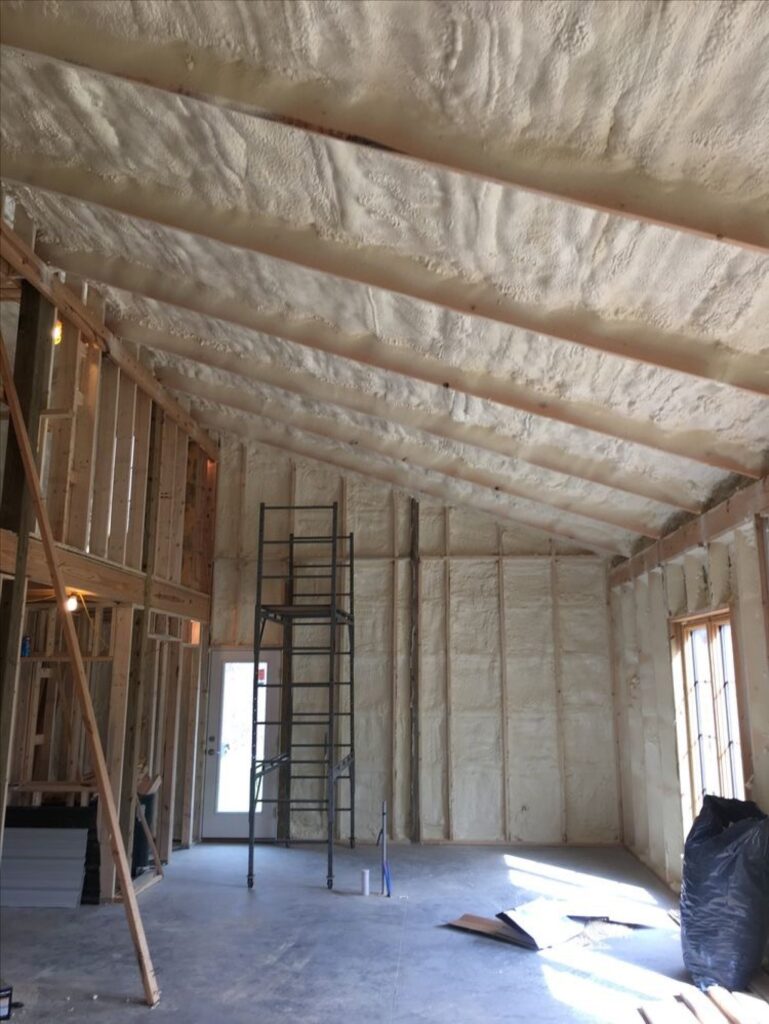
Spray Polyurethane Foam Insulation is a two-component, low density system designed for commercial and residential insulation applications. Currently, we use a closed-cell Polyurethane Foam that yields the highest R-value available on the market today. Spray foam can fully insulate a home or building, as well as seal it from air and moisture infiltration, resulting in a more efficient structure with lower energy bills. Spray foam can also strengthen the walls and roof of a home or building, as well as protect it from airborne particulates and mold.
BENEFITS:
Benefits of Spray Foam Insulation:
Prevents air and moisture intrusion
Helps improve comfort by reducing drafts
Reduces the amount of heat gained or lost between in and outside
Can significantly lower energy bills
Strengthens the building envelope and even structural integrity
Doesn’t sag, droop, or lose performance capabilities over time
Helps keep out dust, pollen, and bugs
Reduces and/or eliminates ice dams
Improves indoor air quality by reducing air infiltration
Creates a quieter indoor environment
Spray foam is a great choice if you’re seeking a high-performance insulation system with maximum benefits. Our happy spray foam customers report fewer temperature swings between rooms, quieter indoor environments, and better moisture management throughout their homes and buildings.
PROCESS:
Spray Foam Insulation is a two-component system where the two chemicals combine and cause a chemical reaction that expands the foam to fill almost every crack, void, crevice, and building cavities to provide an efficient, insulating barrier that also reduces air and moisture transfer. The result is a durable, permanent seal that insulates well and improves the overall structural integrity of surface it’s applied to. Our installers are careful to properly prepare the areas where the spray foam will be installed to ensure that the process is clean, correct, and safe. Spray foam is most often installed in new construction homes and buildings when the walls have not yet been covered by drywall, however, it can also be retrofitted in existing homes and buildings and is an especially common choice for insulating and reinsulating attics in our cold Minnesota climate.
OTHER THINGS TO CONSIDER:
Though typically spray foam insulation is more expensive to install when compared to fiberglass batts, the benefits are noticeable and tangible. Unlike fiberglass batts, which allow air and moisture to easily pass through, spray foam provides a sturdy air and moisture barrier that protects from unwanted drafts and moisture issues. Customers also report less dust, lower utility bills, and a quieter indoor environment.